

How AI Is Transforming Daily Work in Service Teams
Reduce downtime and improve service efficiency with AI-powered troubleshooting. Learn how service teams use ilean to solve problems faster and capture knowledge.


Autodesk's 2027 release continues its focus on deepening Revit's structural capabilities, with meaningful updates across reinforced concrete, analytical modelling, and steel detailing. Here's a technical breakdown of what's changed and what it means for your workflows and productivity.
Watch this video to see our consultant Lawrence Hooker walk through the updates to the structural features within Revit 2027.
This article covers:
Model queries - interrogate the model without manually navigating the project browser or running schedules
View and sheet generation - create documentation through conversational commands
Workflow guidance - contextual suggestions for completing tasks
This sits alongside early MCP (Model Context Protocol) server functionality, which hints at more extensible AI integration in future releases.
The Revit Structure 2027 release provides some great updates in concrete modelling and reinforcement. All the concrete modelling features are now consolidated in the new dedicated Concrete tab.

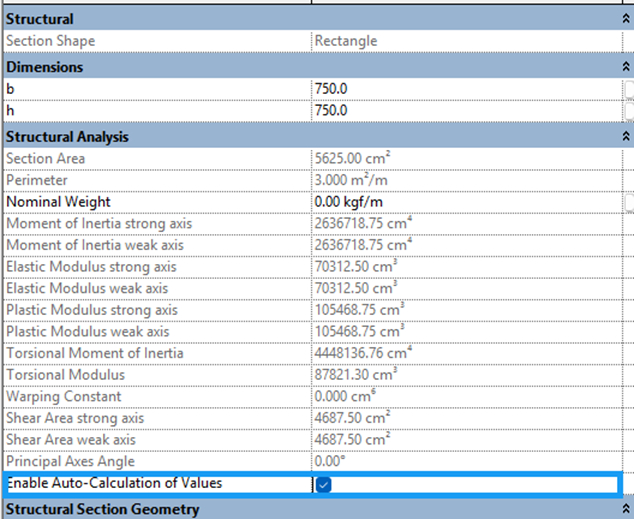
Concrete columns and beams can now have their structural properties — moment of inertia, section modulus, and so on — automatically calculated from the member's cross-sectional shape and size. Properties can still be manually overridden by unchecking the auto-calculation option.
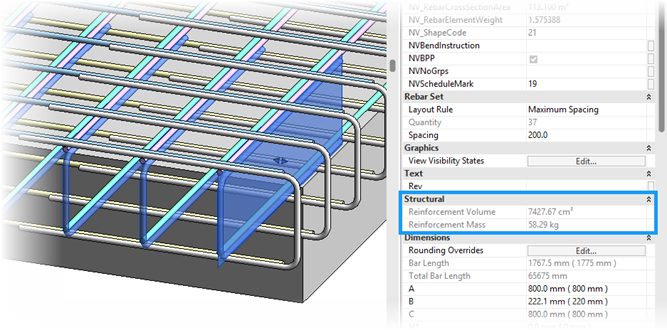
The reinforcement mass is now calculated for all rebar, enabling the production of all required bending schedules to display the weight of steel. This will also help with carbon calculations and construction site safety.
The morphed free form tool makes the modelling of transverse rebar much simpler allowing the user to simply select the reinforcement parallel to the view. The transverse rebar is then populated either across a single segment or the entire length of the bar.
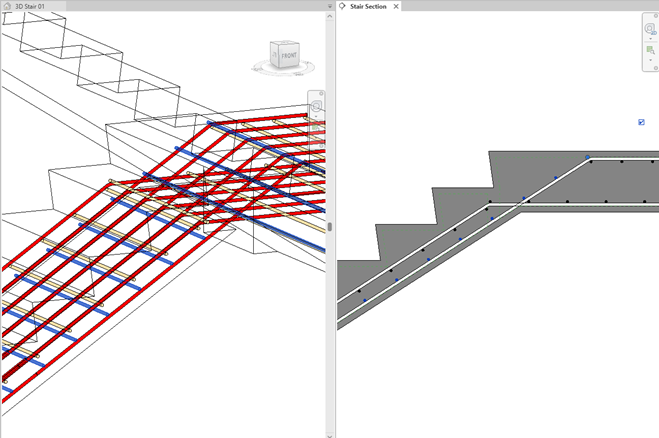
The morphed free form and path free form toolsets provide a robust set of tools to reinforce civil structures such as bridges, tunnels and complex concrete shapes.
When working with rebar sets, a new layout rule is available greatly improving the way we can reinforce beams and columns. The new layout rules allow for differing ranges within the same rebar set.
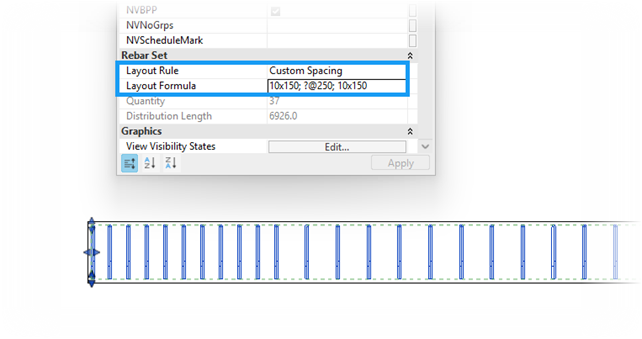
The Layout Formulae can take the following formats:
|
Format |
Example |
|
Number of spaces x Spacing |
3x100; ?x200; 5x100 |
|
Length @ Spacing |
1400@100;900@300 |
|
Percentage of set Length |
33%@100;?@200;33%@100 |
Of course, the formulae enables complete parametric updates when concrete members are edited. New built-in parameters also control how a formula driven rebar set is tagged and detailed.
The traditional reinforcement numbering methodology has been discontinued. The Rebar Number built-in parameter is now editable and driven by a centralised Numbering tool in the core Revit software, bringing rebar numbering in line with how other elements are managed across the platform.
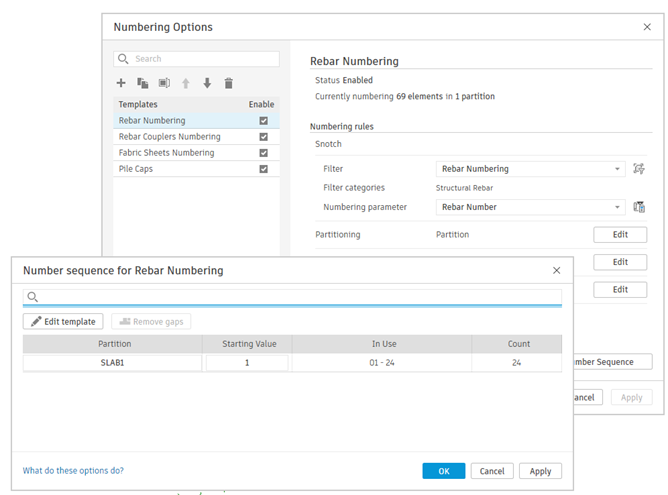
Analytical panels can now be split into sub-panels by selecting grids, levels, sketch lines, or the edge of an adjacent analytical member. This is particularly useful when a structural slab or wall spans multiple bays but requires discrete panels for load application or engineering analysis.
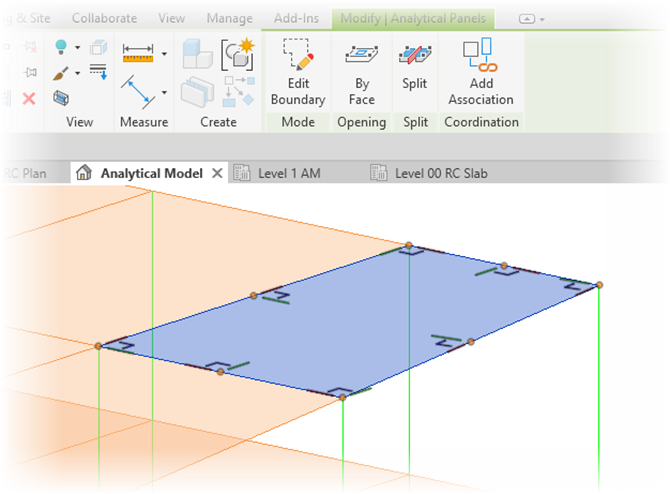
Automatic Material Thickness
When associating an analytical panel with a physical floor or wall, Revit now automatically assigns the structural material thickness, excluding non-structural layers such as blinding. This reduces manual data entry and improves accuracy when transferring models to analysis software.
Wind loads can now be modelled directly in Revit and applied using the new cladding role. For complex roof and façade arrangements you can use Dynamo to automate the modelling of the panels. Loads can now also be applied across multiple panels.
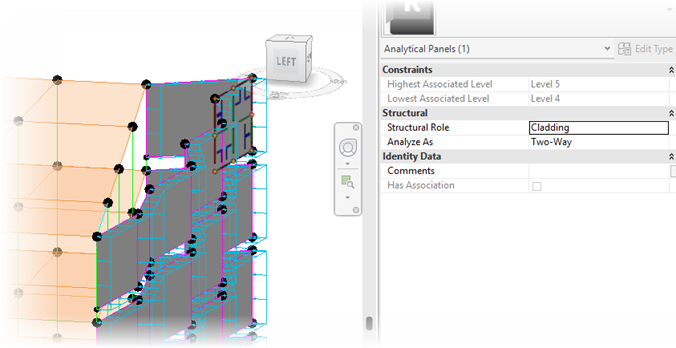
Analytical Automation and Pinning
The analytical model now supports automatic synchronisation with the physical model helping to keep both synchronised. Elements can be pinned to freeze their analytical position if manual control is needed, for example where beams or columns should not follow panel movement.
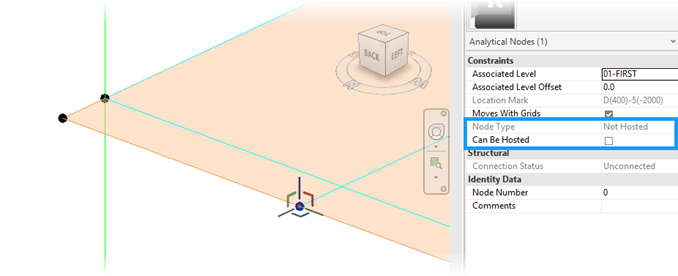
Analytical nodes can also be un-hosted from their connected elements, addressing cases where connectivity should not drive geometry.
The 2027 release lays groundwork rather than delivering finished steel detailing functionality. Standard editing commands - cut, notch, and structural openings - can now be applied to fabrication elements (steelwork modified via the Steel tab). Previously, these operations were restricted to native Revit elements.
This is explicitly foundational work: the unified editing environment this creates is intended to support full steel modelling and detailing workflows in future releases.
To support these new Revit 2027 capabilities, now is a great time to take advantage of our training opportunities. Whether you’re looking to refine your core Revit skills or deepen your capabilities, we’re offering an exclusive 25% discount on any Revit training course booked before 1st June.
When booking a training course on our website, please use the discount code: AUTODESK27
This is also an ideal opportunity to explore how complementary tools and structured workflows can enhance your Revit environment, helping to improve reinforced concrete, analytical modelling, and steel detailing workflows.
If you have any questions or would like help choosing the right training option, please contact us.
Need help deciding whether you should upgrade to the Revit 2027 releases or need more help understanding how they can fit into your workflows? Get in touch below!
You can also call us on 0345 370 1444 or email info@symetri.co.uk
Reduce downtime and improve service efficiency with AI-powered troubleshooting. Learn how service teams use ilean to solve problems faster and capture knowledge.
The construction industry is entering a new era, and Bluebeam is once again leading the way. In 2026, Bluebeam Max will launch as a new premium subscription that combines the power of Revu with advanced AI technology. This blog highlights just some of features you will expect to see within Bluebeam Max.
In construction, the gap between the construction site and the office has always been a challenge. But by combining Bluebeam’s powerful PDF markup tools with GoCanvas’s mobile forms, companies can finally achieve seamless documentation that flows effortlessly from site to office.